-
UNIPINews Archaeology and Accessibility/Archeologia e AccessibilitàWebinar conclusivo di “Aree Archeologiche e accessibilità: da limite a opportunità”
-
-
ARQ: Architectural Research Quarterly vol 28.3 (2024), 336-339. Iason Stathatos, “On Prosthesis, Extraction, and Reconstruction: ‘An Archaeology of Disability’”
-
Architectural Histories 12.1 (2024) B. Smith, “Lessons from the Ancient Greeks: Reimagining Disability”
-
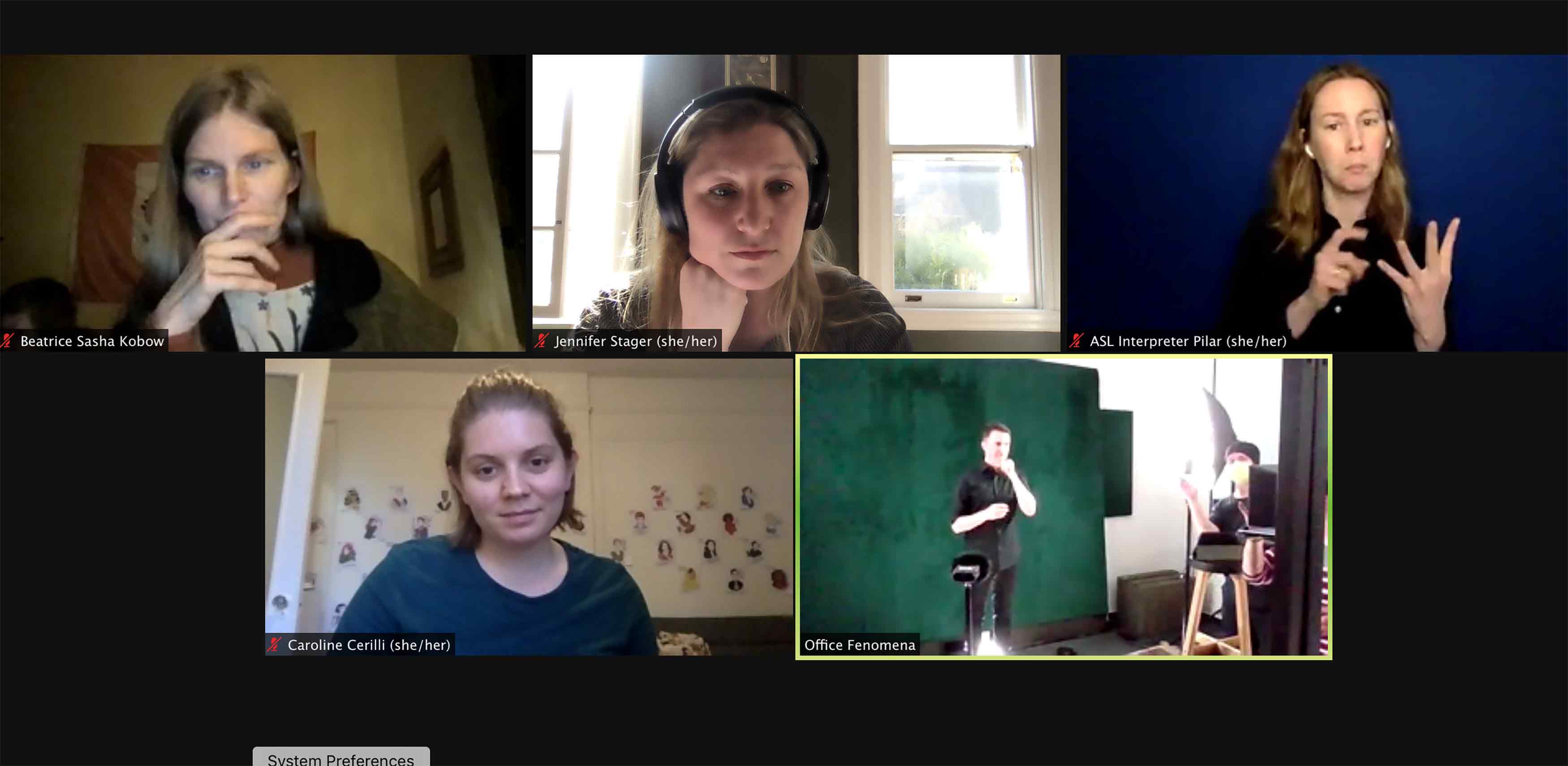
Peopling the Past An interview about making the film-work Sēmata/Signs for An Archaeology of DisabilityProducing the short film “Sēmata (Signs)” for the curated exhibition, “An Archaeology of Disability” with Christopher Tester, Pia Hargrove, and Caroline Cerilli.
-
Pisa University Press Aree Archeologiche e Accessibilità: Riflessioni ed EsperienzeA cura di Anna Anguissola e Chiara Tarantino
-
An Archaeology of Disability: A Dialogic | Essay*David Gissen, Pia Hargrove, Brooke Holmes, Jennifer Stager, Christopher, Tester, Pasquale Toscano, Mantha Zarmakoupi
Projects
An Archaeology of Disability
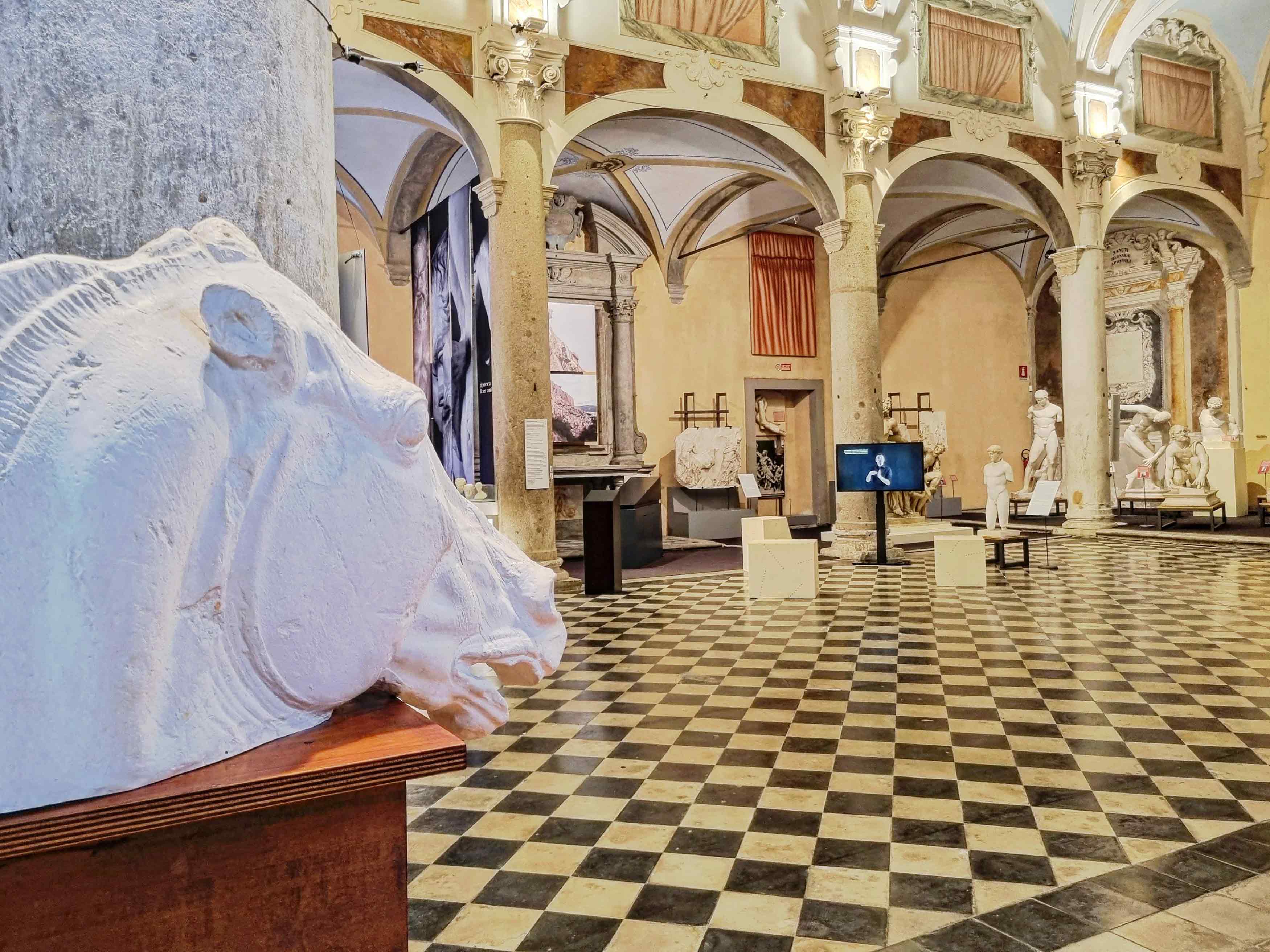
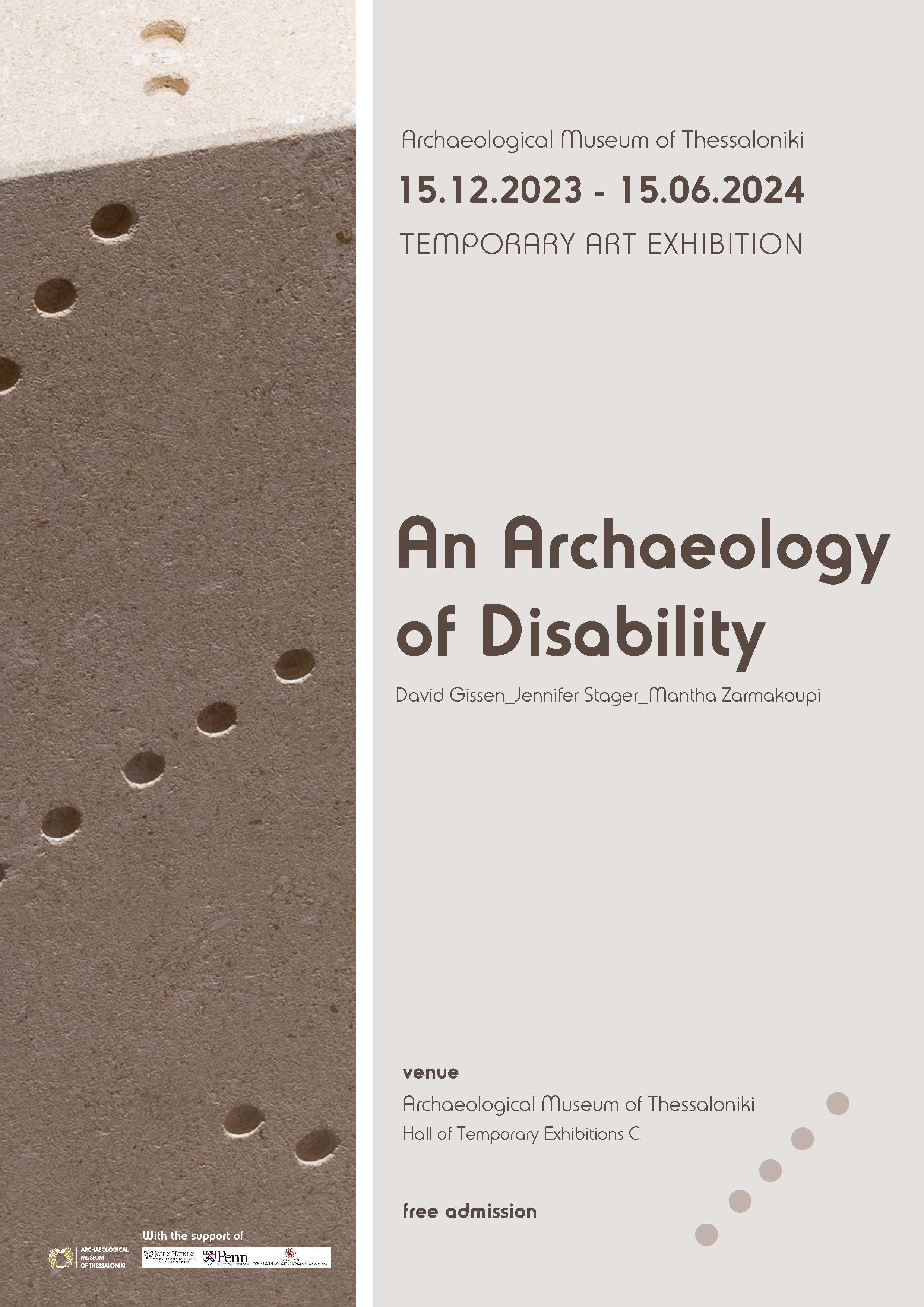
(David Gissen, Jennifer Stager, Mantha Zarmakoupi) opened at the 2021 Venice Biennale Architettura: How Will We Live Together?, traveled to La Gipsoteca di Arte Antica, Pisa (Spring 2022) the Canellopoulos Museum, Athens (Summer 2023), the Archaeological Museum of Thessaloniki (Spring-Summer 2024).How will we live together?
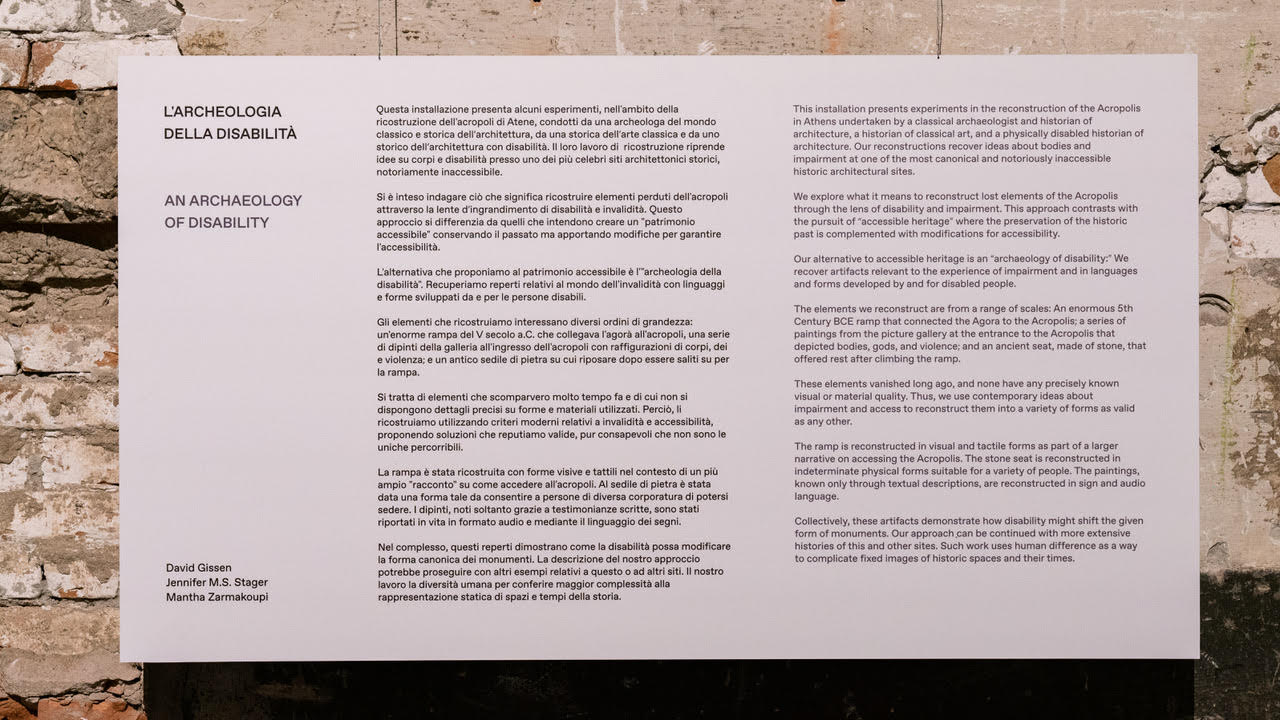
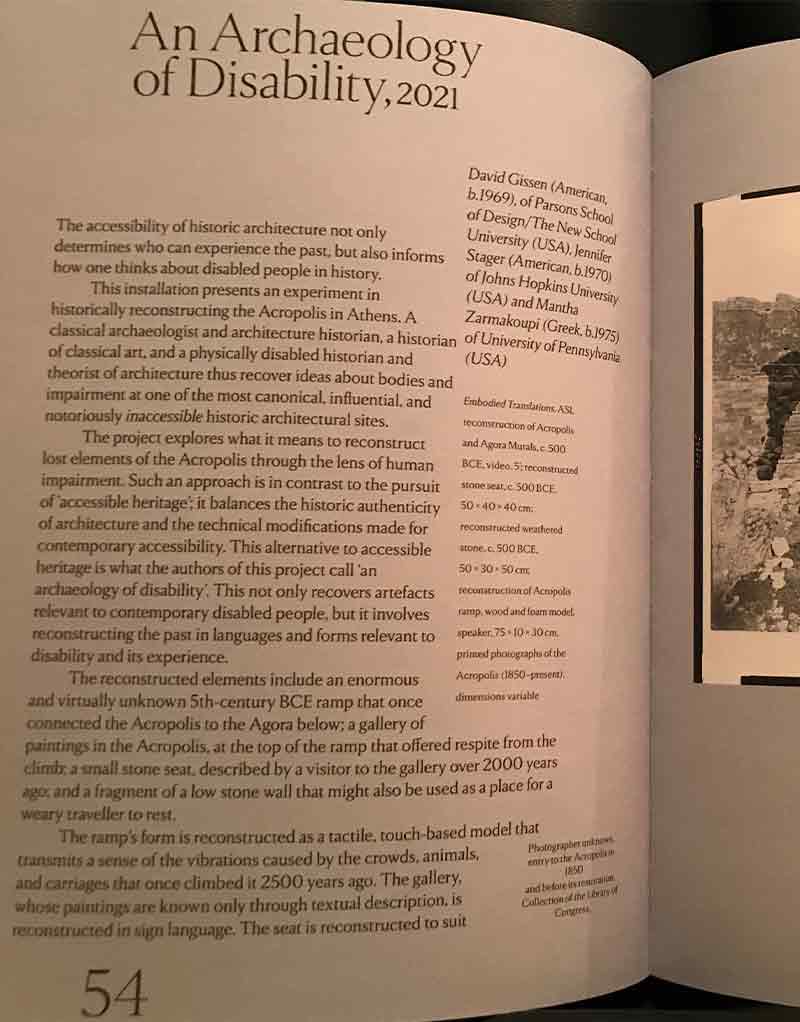
The accessibility of historic architecture not only determines who can experience the past, but it also informs how we think about disabled people as part of history. This installation presents an experiment in the historic reconstruction of the Acropolis in Athens. Our reconstructions recover ideas about bodies and impairment at one of the most canonical, influential, and notoriously inaccessible architectural sites. We explored what it means to reconstruct lost elements of the Acropolis through the lens of human impairment. Such an approach contrasts to the pursuit of “accessible heritage” — a balance between historic authenticity of architecture and technical modifications made for accessibility. We call our alternative to accessible heritage “an archaeology of disability.”
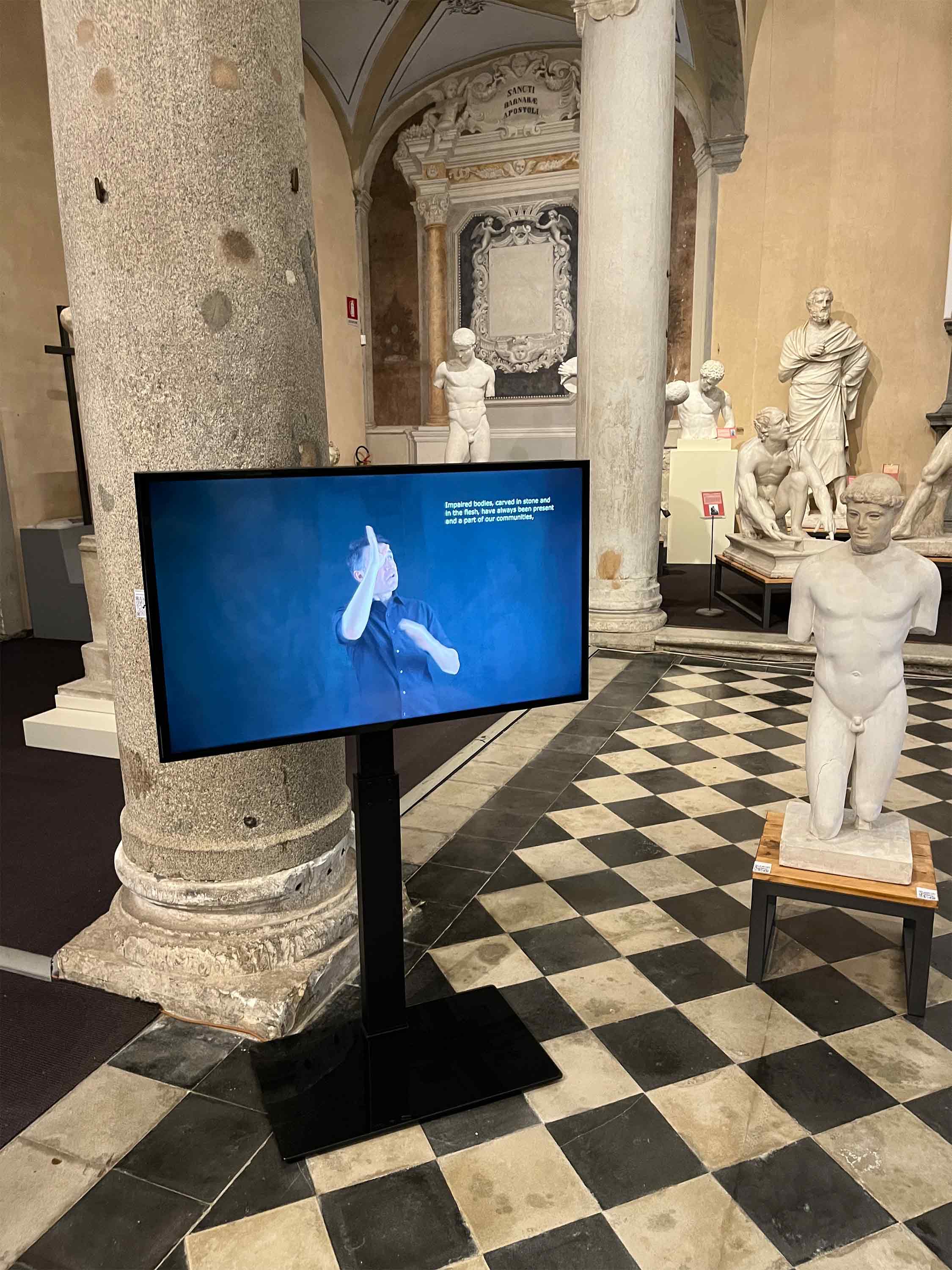
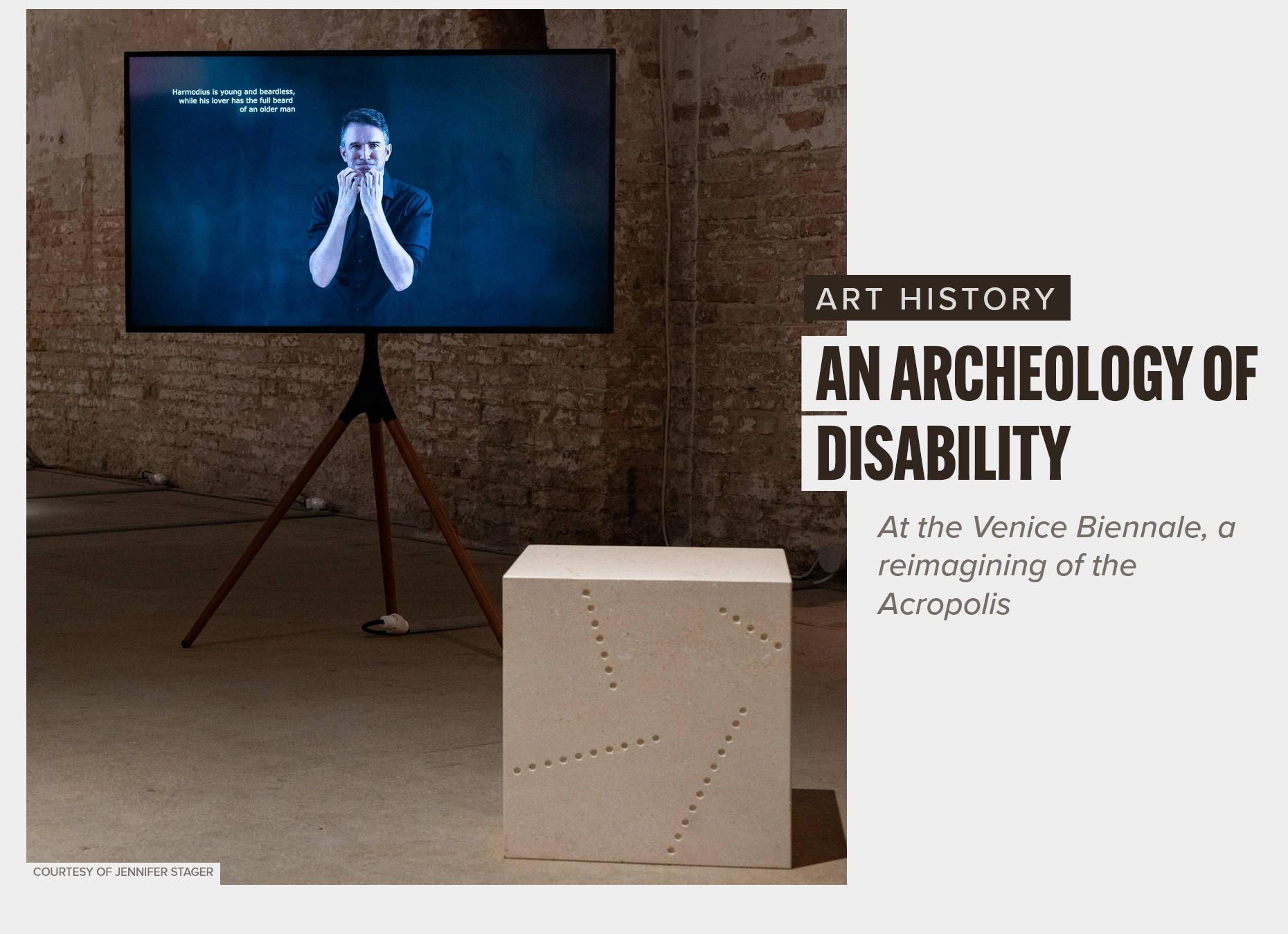
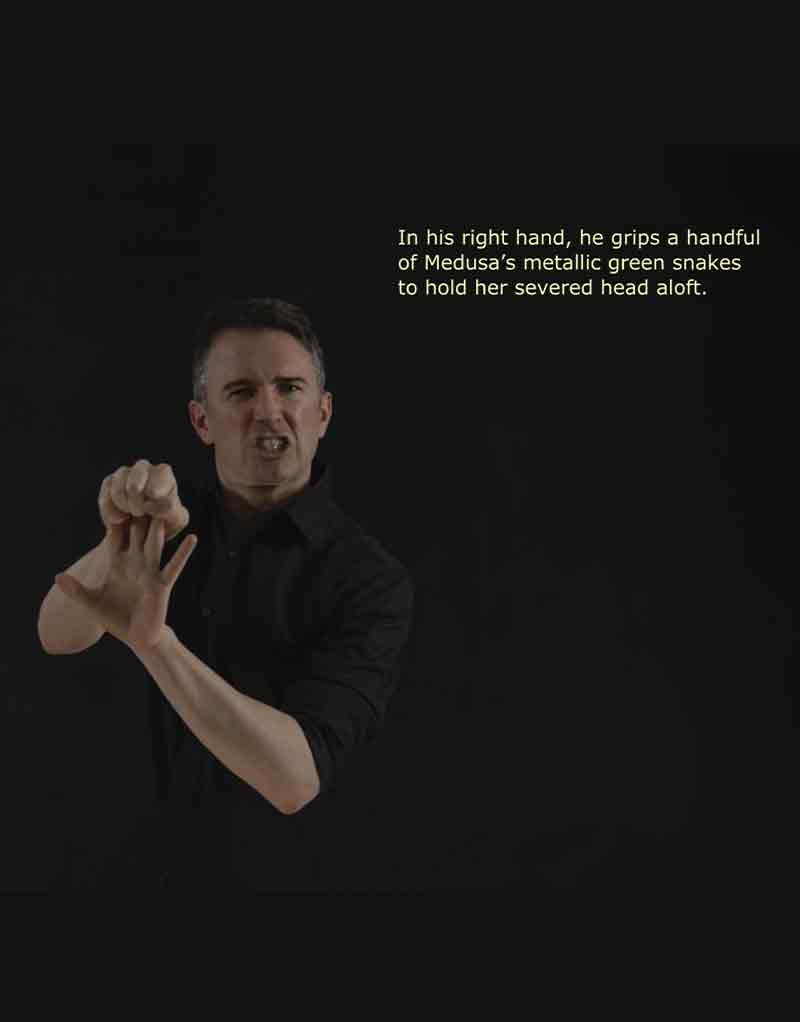
The elements we reconstructed include an enormous 5th Century BCE ramp that once connected the Acropolis to the Agora; a gallery of paintings at the top of the ramp; and a small stone seat, described by an ancient visitor as a place to rest. The ramp’s form is reconstructed as a tactile, touch-based model that transmits vibrations like those caused by the ancient crowds, animals, and carriages. It is ringed with a frieze of braille. The paintings, known through text, are reconstructed in sign language. This reconstruction, titled “Sēmata” (signs) is performed in a film-work. The stone seat is reconstructed in three different sizes and heights. Each is decorated with braille-like patterns that communicate the optical effect of weathered stone into a tactile form. Collectively, these reconstructions demonstrate another way to consider disability and the historic past — one that moves beyond technological fixes to physical objects. Disability emerges as a form of historical inquiry, archaeology, and reconstruction —one informed by the experience of collective human difference across space and time.
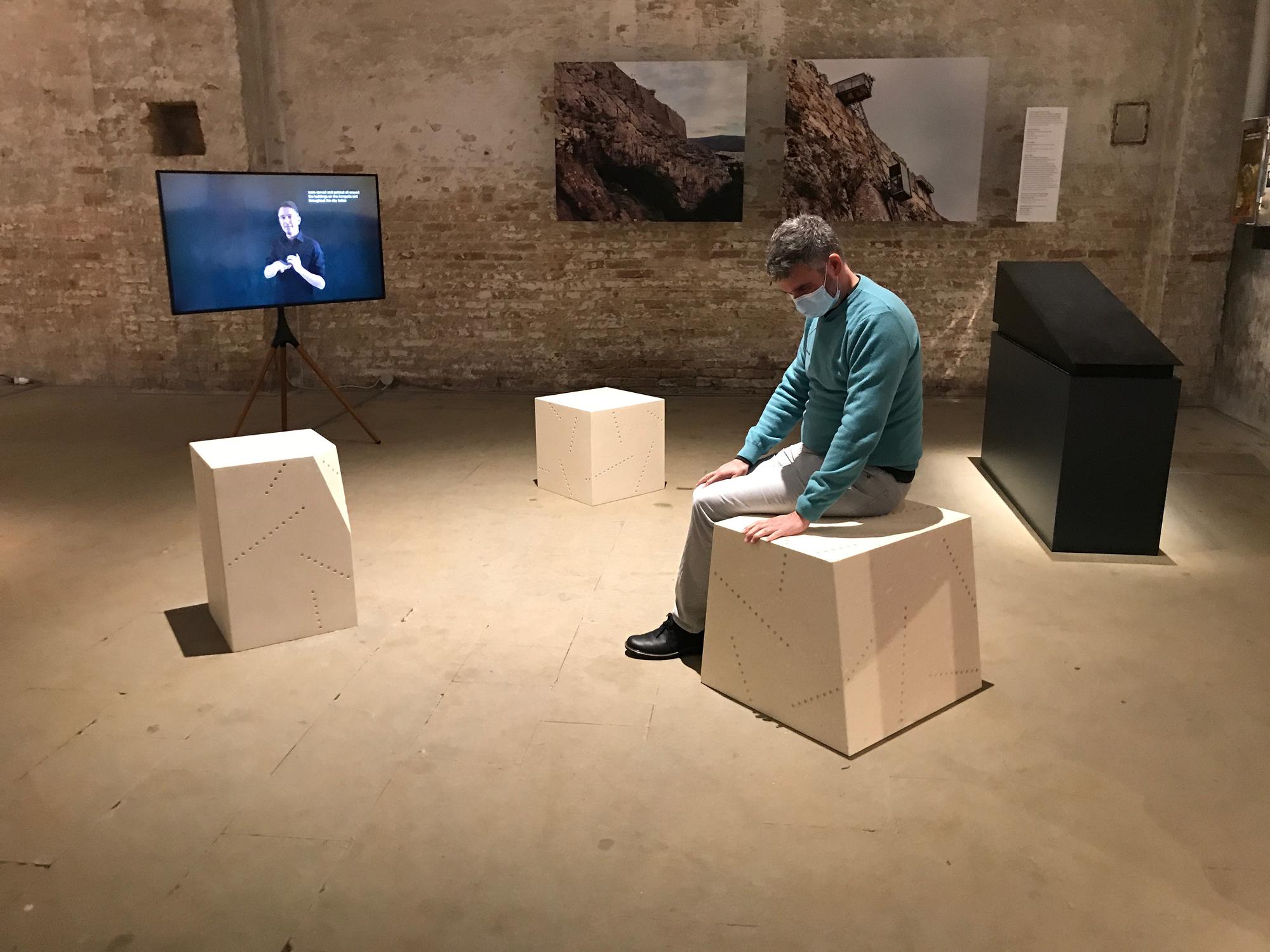
“An Archaeology of Disability” – Biennale Installation (credit: Mantha Zarmakoupi)
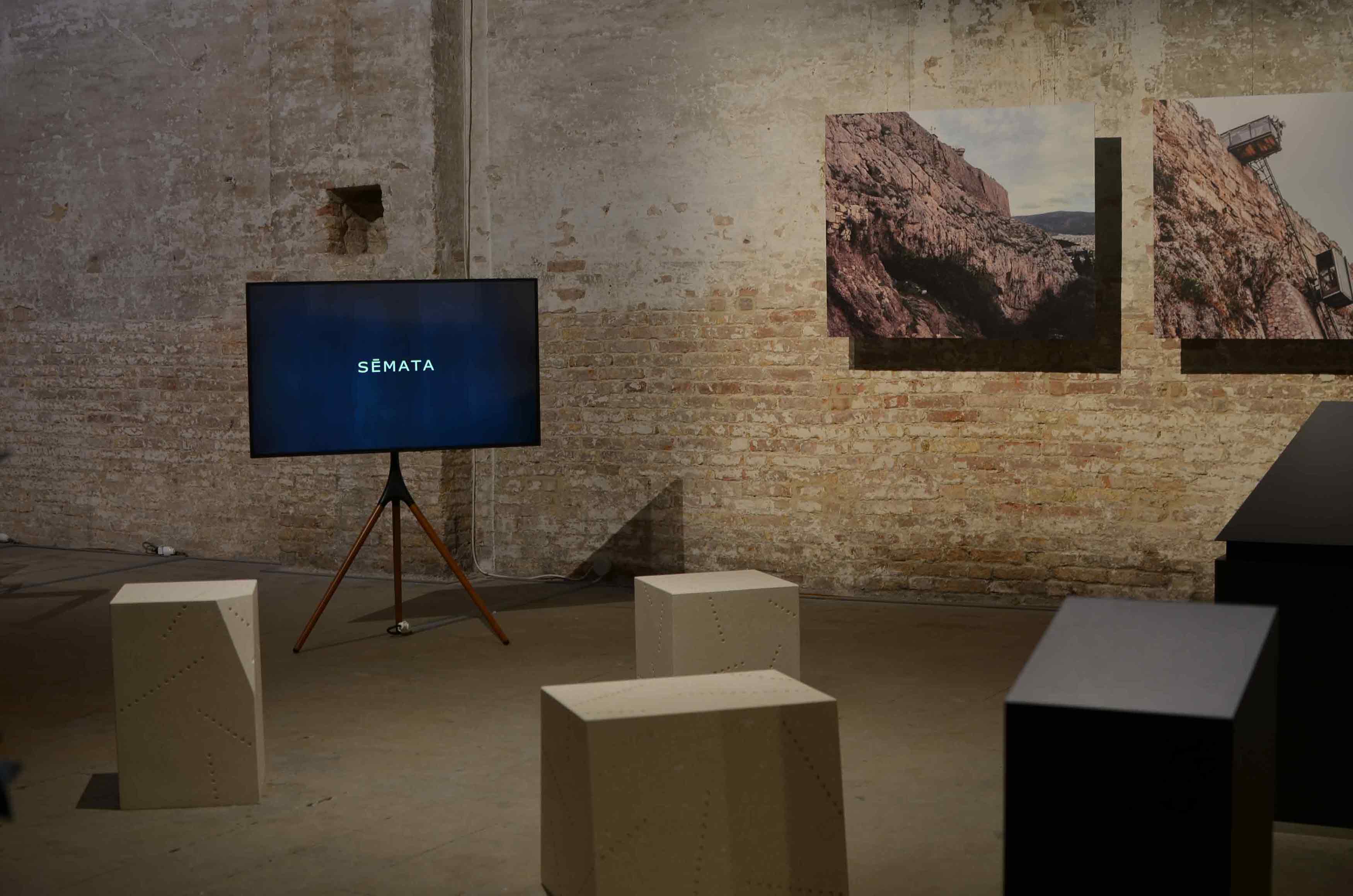
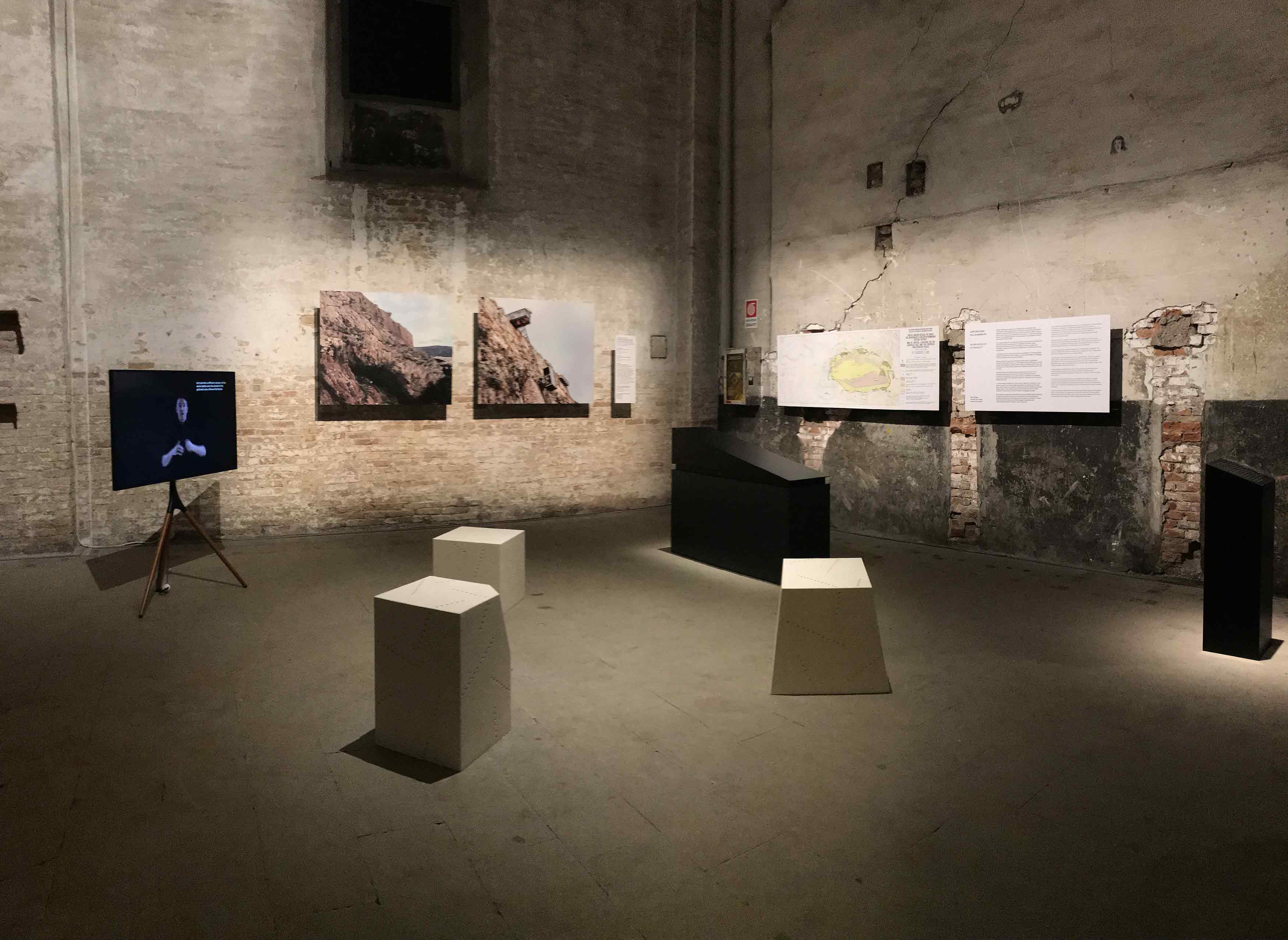
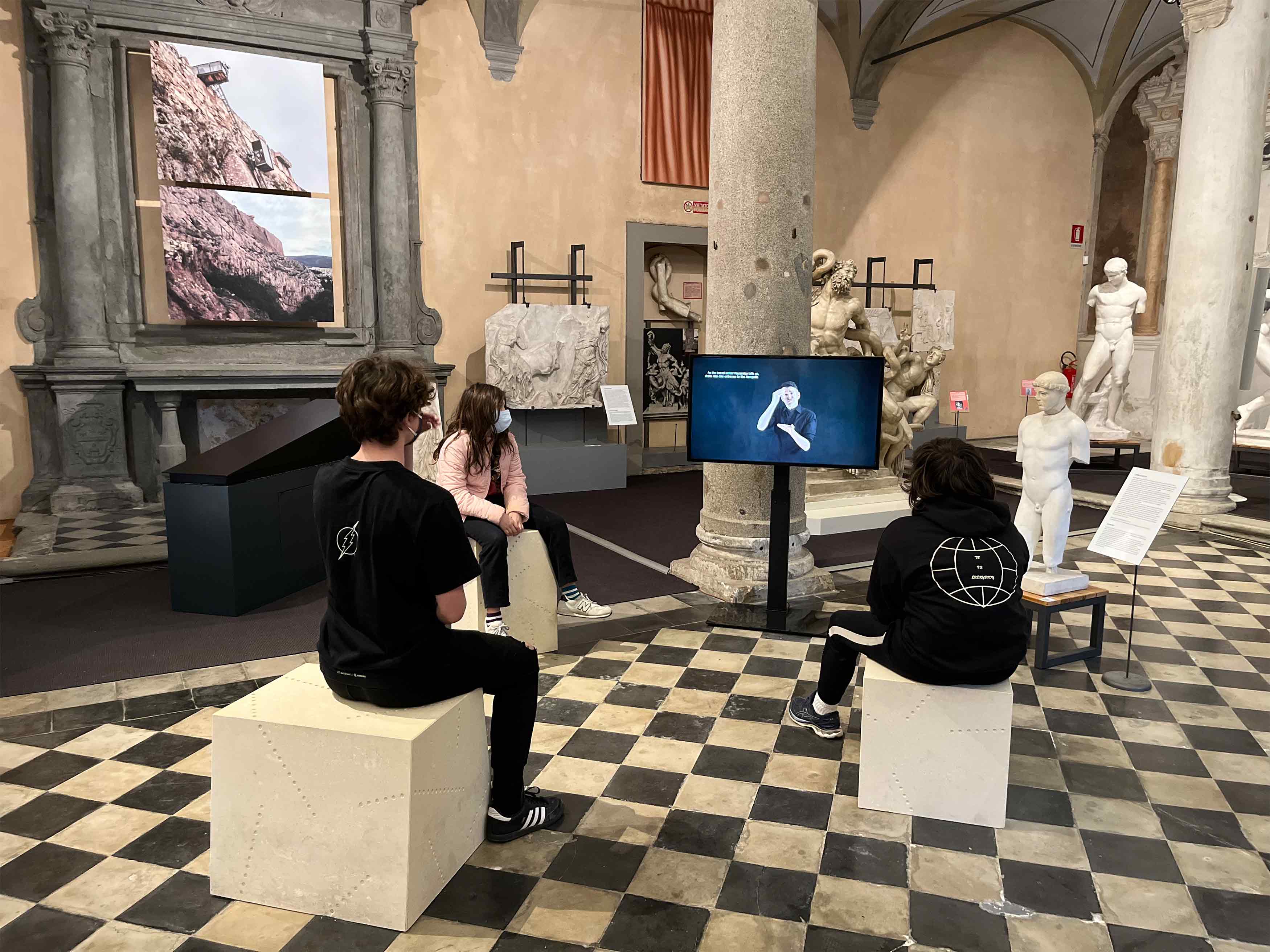
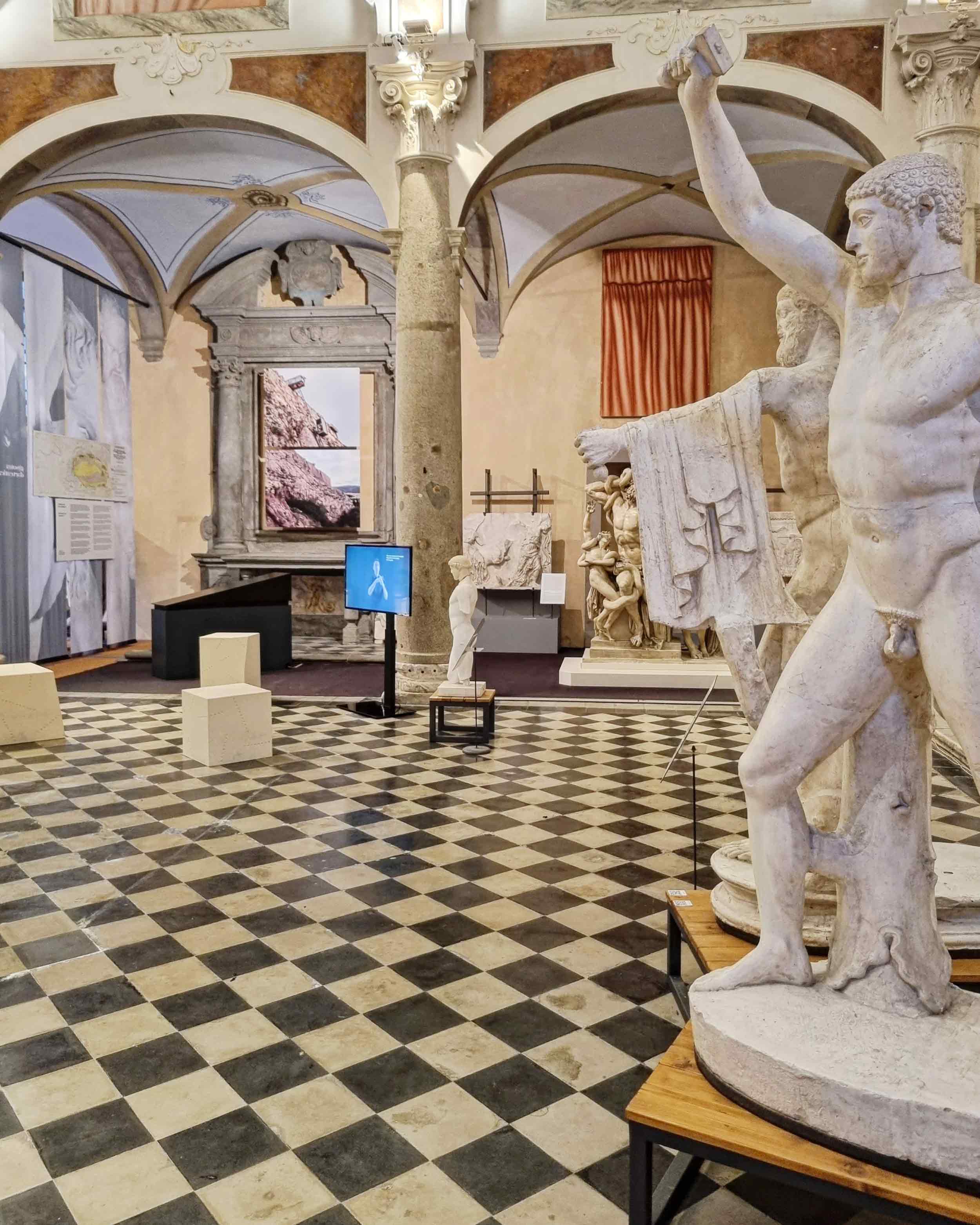
Installation view, featuring three seats of stone with patterns drilled into them, the model of a ramp that vibrates when touched, photographs of the rock of the Acropolis and an older single-person elevator ascending, and a film, “Sēmata” recovering a lost Greek picture gallery that once stood at the gateway to the Acropolis, performed in Greek and American sign languages by Christopher Tester.
Installation view, featuring three seats of stone with patterns drilled into them, the model of a ramp that vibrates when touched, photographs of the rock of the Acropolis and an older single-person elevator ascending, and a film, “Sēmata” recovering a lost Greek picture gallery that once stood at the gateway to the Acropolis, performed in Greek and American sign languages by Christopher Tester.
“We did end up working across many different collaborative spaces, not all of which we were each present in at the same time, but these smaller collaborations fed through the collective process of the project itself.”
“Thinking about the relationship between Christopher’s performance and the physicality and materiality of the casts, and Pia’s voice-work, they each had such different temporalities and different material instantiations.”
Sēmata (Signs) Audio Description performed by Pia Hargrove
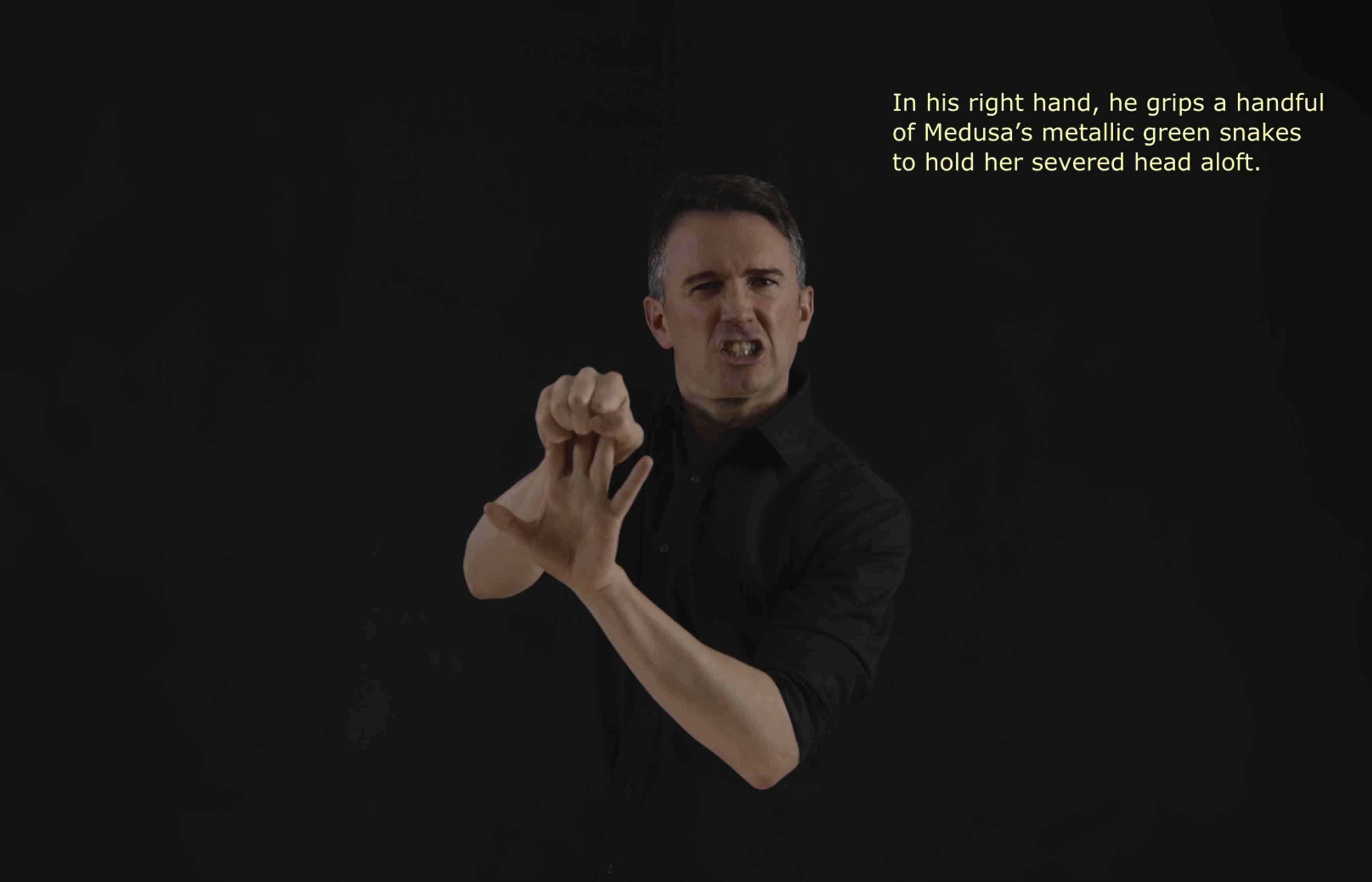
In the short film Sēmata (Signs), the actor Christopher Tester recovers paintings that hung in a picture gallery that once stood just inside the gateway to the Acropolis (the Propylaia) in American sign language, while Pia Hargrove performs the accompanying audio description in English.
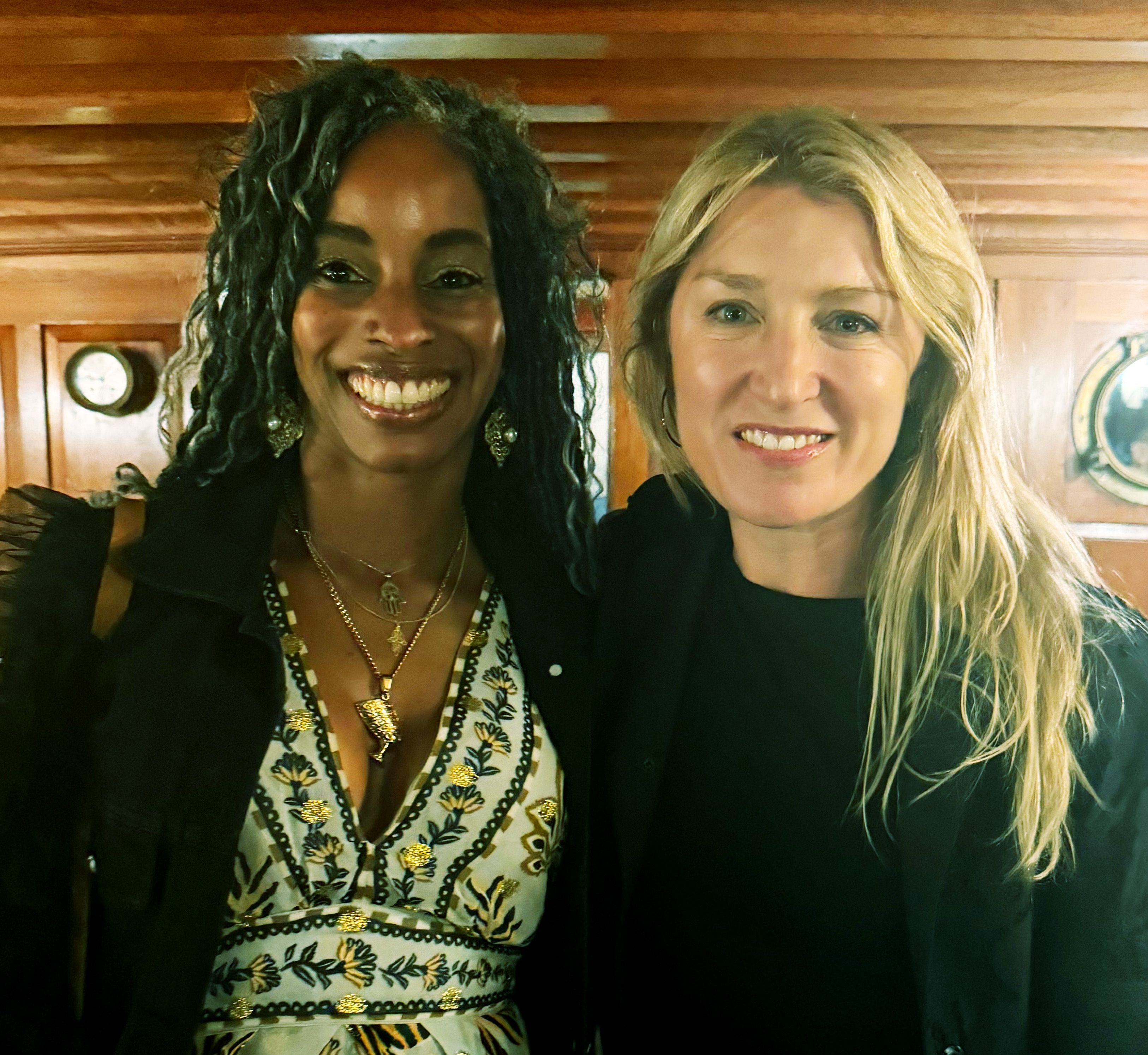
Jennifer Stager and Pia Hargrove 2025

Press and Related Essays