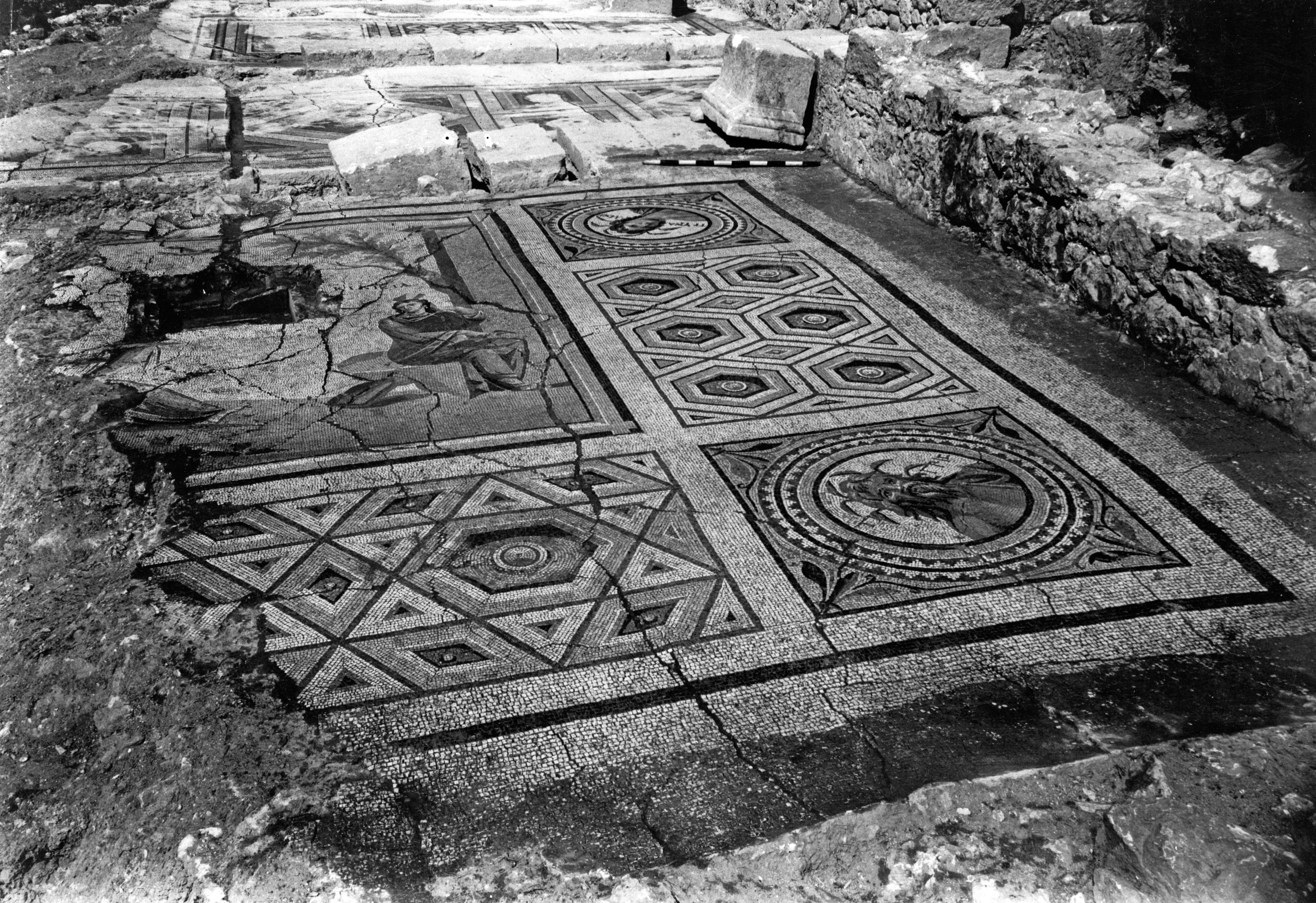
ABSTRACT: Mosaic floors from the House of Cilicia at Seleucia Pieria, a port near Antioch-on-the-Orontes, depict topographical personifications of the territory of Cilicia framed by those of the rivers Tigris and Pyramus, among other personifications that are now damaged. Fitted together from colorful cut stones, these figural assemblages draw together place-based materials and the personhood of topographical elements. Drawing on legacy data from mosaics excavated in the 1930s and dispersed to institutions across North America, this essay argues that the afterlives of these mosaics remap the environments that they personify in modernity and, thus, craft hyperreal networks of relation to enact forms of distributed personhood.
(with Ella Gonzalez and Danielle Ortiz) in Ancient Pasts for Modern Audiences, Sabrina C. Higgins and Chelsea A.M. Gardner eds. Routledge 2025, 201-228.
ABSTRACT: The Antioch Recovery Project (ARP) uses digital tools to reunite the vast corpus of mosaic fragments from the ancient city of Antioch, located near the mouth of the Orontes River in modern Antakya, Türkiye (bordering Syria). Since their excavation, hundreds of fragments of these mosaics have been dispersed across the globe in what Ezgi Erol names a “mosaic diaspora,” rendering these fragments in Arjun Appadurai's words “accidental refugees.” ARP partners with an ongoing, research-driven class taught at the Johns Hopkins University (JHU) in Baltimore, MD. Using a flipped-classroom model, this class analyses the mosaic fragments within three different chronological periods: (1) the 2nd–6th-centuries CE, when artists crafted them; (2) the years between 1932 and 1939, when they were excavated by an international team; and (3) their twentieth and twenty-first-century contemporary museum afterlives. Digital, open-access explorations, and research results appear on the project's blog and through ArcGIS and StoryMaps, connecting the project with the public and with the global community of Antioch researchers. In the following chapter, we introduce the overall project, its connected pedagogical approach, and two public-facing results: an ArcGIS map of known locations of Antioch mosaic fragments, and a digital reconstruction of the fragmented Hall of Philia mosaic, the latter made using the iPad application Procreate. Both explorations contribute to ARP's goals of visualising relationships across the dispersed mosaic corpus in a public, free, and accessible format. This work mends breaks between fragments distributed across a variety of institutions to illuminate the ancient and modern geopolitical and social conditions in which these mosaics were and are embedded, conditions that their materials, making, and motifs have also helped to shape.
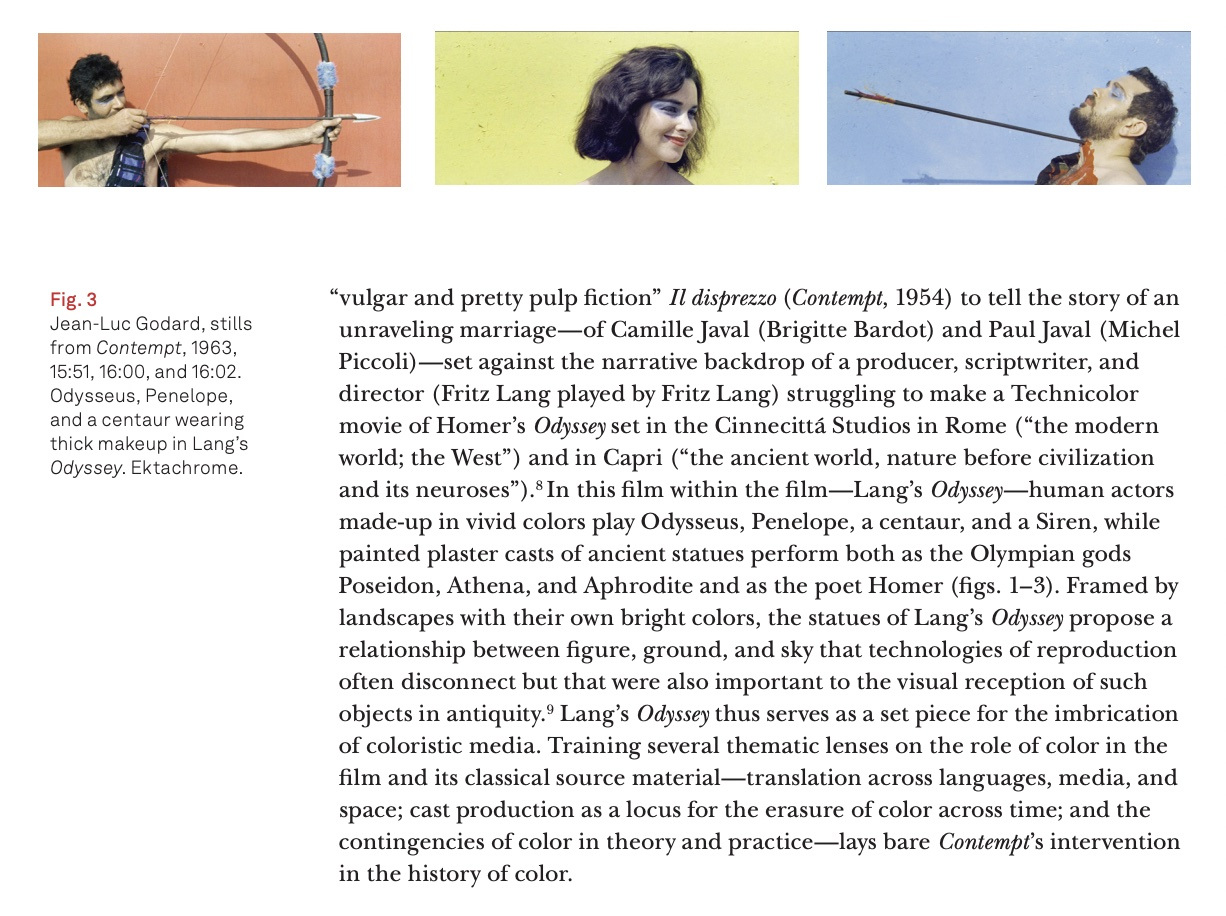
ABSTRACT: Jean-Luc Godard’s film Le mépris (Contempt, 1963) adapts Alberto Moravia’s novel Il disprezzo (Contempt, 1954) to tell the story of an unraveling marriage set against the narrative backdrop of a producer, scriptwriter, and director (Fritz Lang playing Fritz Lang) struggling to make a Technicolor movie of Homer’s Odyssey. In Lang’s mise en abyme, human actors made-up in vivid colors play Odysseus, Penelope, a centaur, and a Siren, while painted plaster casts of ancient statues perform as the Olympian gods and Homer. These painted statues intervene in long-standing debates about paint on sculpture and invoke the instability of commercial color film technologies to take aim at the fixed tradition of a monochrome classical past and the gendered, racialized associations that past had so often been designed to conjure.
ABSTRACT: In the context of the entangled productions of scientific archaeology, photographic technologies, and the Greek nation-state, this article analyses the ancient Greek idea of the eidōlon (image, phantom, double) as a paradigm for photography. Sophia Engastromenou Schliemann presented herself for the camera as Helen of Troy and mobilized an ancient textual debate about Helen and her double and the Trojan War. This image of Sophia adorned in Trojan gold is widely known and little studied and, as this essay will explore, it circulated far beyond Sophia’s control. Undergirding this article’s historical contingencies is an exploration of the photograph as eidōlon.
Edited by Carl Knappett and Christopher Watts. Routledge 2022, 243-276.
ABSTRACT: A pyxis, or small, portable, lidded container, is an object often associated with women’s private life and personal care. Artists working in the fifth century BCE in Athens crafted a number of these containers from clay and painted them with scenes of women in community with each other. These containers offer a meso-scale at which to analyze the materialization of women’s communities of care in the ancient Greek past. Building from the philosophical framework of a feminist ethic of care to analyze this group of objects illuminates some of the networks of care undergirding ancient communities. An archaeology of care centers these networks of care and the role of careworkers and carework in forging and maintaining communities.
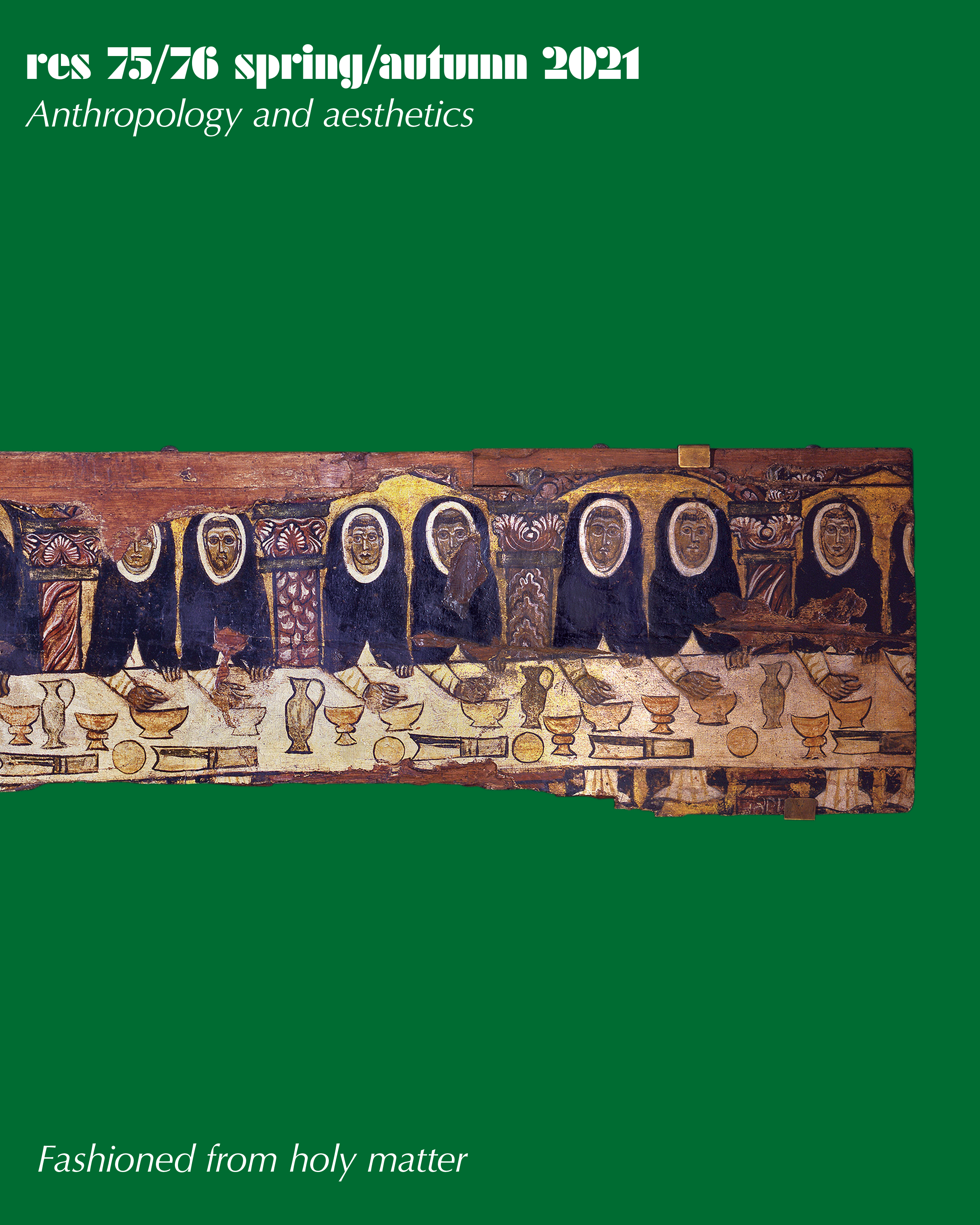
ABSTRACT: This essay explores transfigurations of Narcissus and Echo in the mosaic floors excavated from the seaside town of Daphne (Harbiye) near the city of Antioch-on-the Orontes. These material and sensory transformations are particularly resonant at Daphne, a site named for the nymph who turned into a laurel tree to escape rape by the god Apollo. Of the extant examples depicting their myth at the site, only one includes a depiction of Echo in her physical form. In addition, the non-figural patterns framing these figural scenes mark Narcissus's transformation into flower, collapsing narrative time. Dispersed across different collections since their excavation in the early 20th century, this essay brings together the mosaic fragments from Daphne associated with Narcissus and Echo to analyze the imbricated artistic materializations of their metamorphoses.
ABSTRACT: While our contemporary moment invites necessary engagement with fallism (the practice of toppling monuments of symbols of oppressive power), we wish to instead identify and narrate a parallel heritage to that of the traditional figural monument critiqued by such practices. We suggest that this parallel tradition, which runs from ancient Greece to contemporary times, can itself offer new forms of possibility to engage and include a more diverse set of voices while also remaining grounded in historical precedent. Building on Athena Kirk’s theory of apodeixis, a practice of making a list visual, “Overwriting the Monument Tradition” traces this history of apodeictic monuments from the ancient Greek casualty lists set up in Athens in the fifth century BCE to Maya Lin’s Washington, DC Vietnam memorial to the epigraphs for one thousand of the first one hundred thousand deaths from Covid-19 in the United States on the cover of the New York Times on May 24, 2020 CE to contemporary poetry, protest, and performance. Ultimately, we argue that this tradition mobilizes naming and the poetic power of the list to elevate not singular hegemony but instead a plurality of raised voices.
Edited by Rachael Goldman. Piscataway, NJ Gorgias, 2016, 97-120.
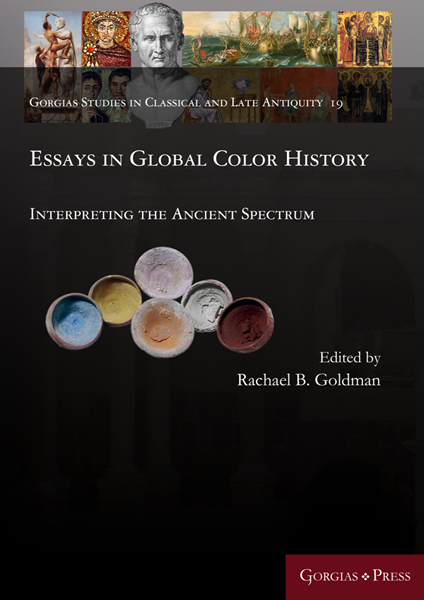
ABSTRACT: This collection of 13 interdisciplinary essays (3000 B.C.- 600 A.D) examines a wide range of topics, examining the use and cultural significance of color in the Ancient World. A unifying theme of these essays is that they examine which colors were preferred in ancient cultures, what social and cultural meanings were attached to them, and how we can gain a greater understanding of these cultures by examining how they used and perceived color. After an introduction, the essays will cover the civilizations of Ancient China, Mesopotamia, Egypt, Greece, Rome, Mesoamerica, and the Islamic world. This set of essays will explore how color was used in art (as in sculpture and maps) and cultural attitudes towards color, especially colored clothing and color as applied to physiognomic ideals. This volume addresses the subject of color in an interdisciplinary, world historical approach, including China and Mesopotamia and the Middle East, as well as Mesopotamia and the Classical World.
ABSTRACT: An autopsy of the Hellenistic grave stele of SM[.]/'Αντίπατρος discovered in the 19th century in the Kerameikos in Athens, reveals that its textual (Phoenician and Greek) and visual components differ significantly from previously published descriptions. The author reexamines the morphology of the monument, also considering its sacred address and the force that such a monument exerted on its context. This single monument to a Phoenician buried in Athens engages issues of bilingualism, religious symbolism, and, most importantly, self-definition, which structured the complex social interactions in Athens in the late 4th-2nd centuries B.C.
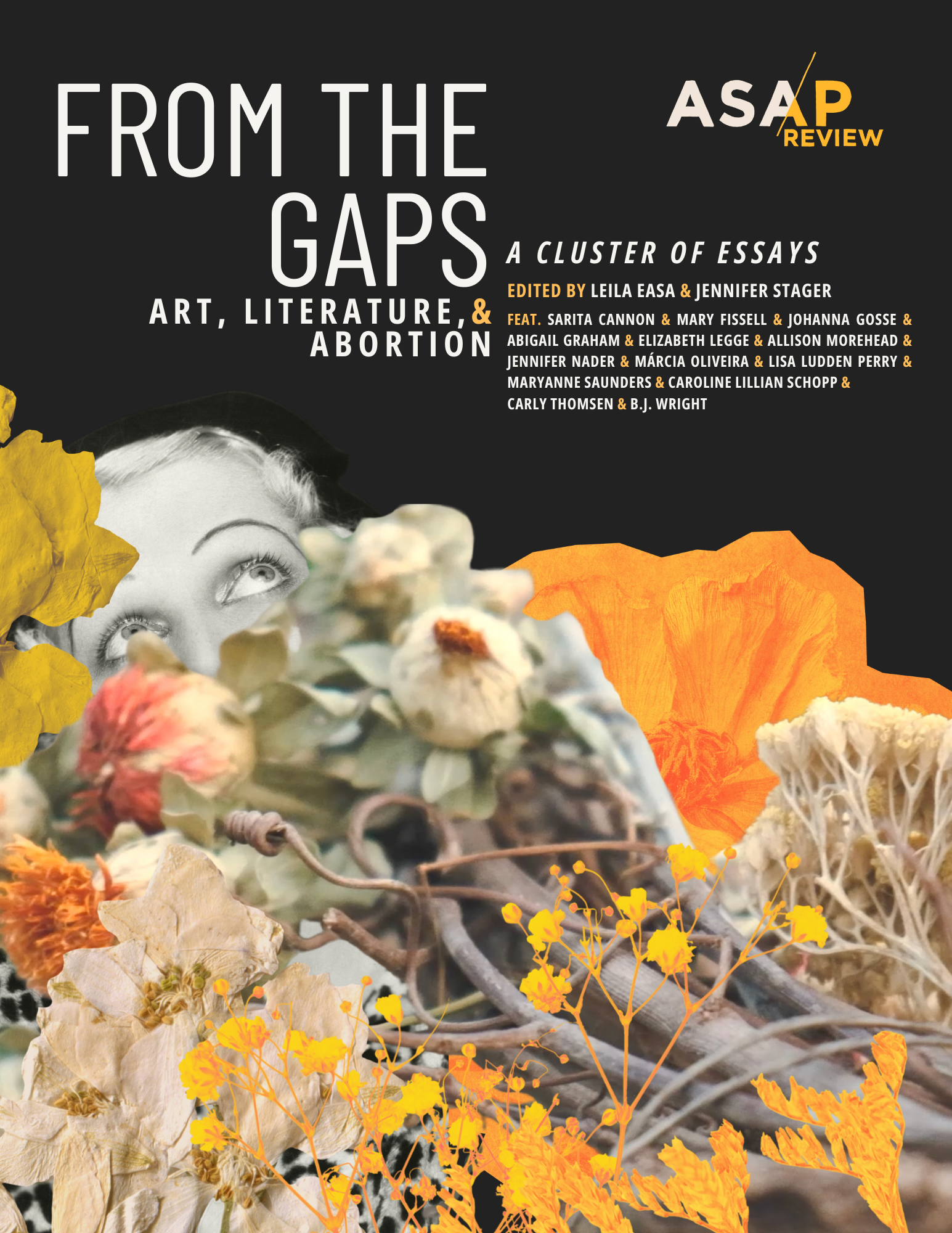
ABSTRACT: From the Gaps: art, literature, and abortion: The art and literature analyzed within this cluster act on and with their audiences, exploring how artists and writers have continued to think about and engage with reproductive freedom—often while flying under the radar of mainstream control—and situating abortion within a deep historical framework of reproductive justice that remains relevant and urgent in the present.”
“Locating a Collective Lyric ‘I’” is a special folio across devoted to the relationships and tensions between the singular and the collective as explored in poetry, visual art, and essays, among other genres.
ABSTRACT: “Live performance always stands in some tension to its archive—the broadsheets, scripts, costumes, props, photographs, and memories that may endure after the applause has quieted—a tension that these edited transcripts both mark and perform. In addition to tracing thoughts that follow each specific performance, these conversations also mark the deep arc of the pandemic, from Baltimore’s initial shutdown to our tentative reconnections three years later.”
ABSTRACT: U.S. activist abortion rhetoric can be viewed as a collective abortion story that shaped both policy and epistemology around reproduction in the United States and participated in the work of nationalism. Specifically, the framework of “choice” activated by many interest groups—itself a hedge against conservative “life” rhetoric—connected abortion access to Americanness itself. Yet in contemporary discourse, new frameworks have emerged that question the capitalist and individualist underpinnings of choice, instead emphasizing relationality and continuity between the human and nonhuman. We trace the history of this shift in the context of Lena Chen’s participatory art installation, “We Lived in the Gaps Between the Stories,” which presents abortifacients and emmenagogues to (re)imagine reproductive management through an alignment with plant life. Chen’s project brings attention to ancient herbs in the present while also engaging the history of private and nonarchival practices of reproductive management that precede the nation state in modernity —the sharing of methods, materials, and treatments in networks that exist outside of legally sanctioned frameworks. Exploring such histories, practices, and materials allows us to consider an abortion story that moves beyond choice to foreground interdependence.
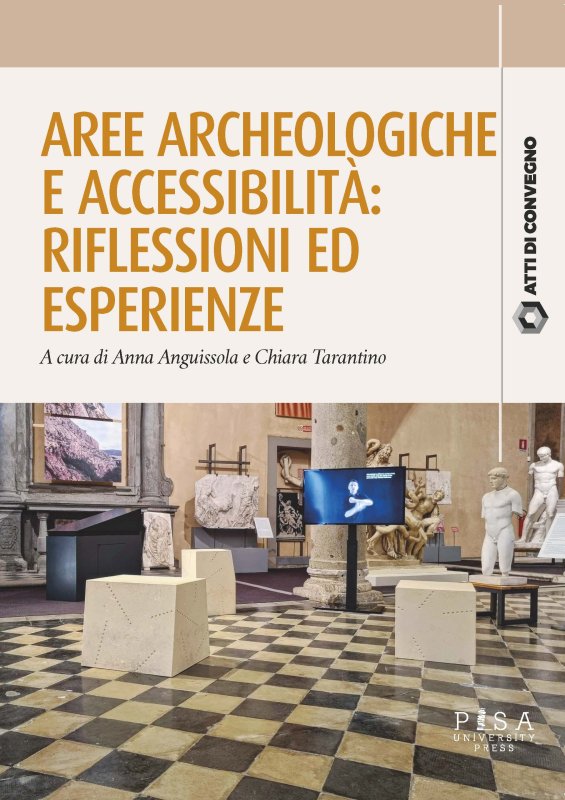
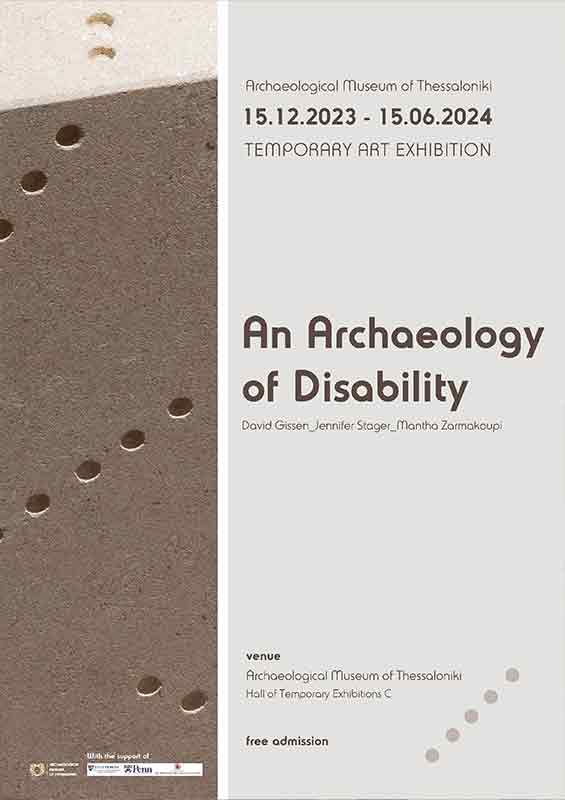
(with David Gissen and Mantha Zarmakoupi) in Anna Anguissola and Chiara Tarantino, eds. Aree archeologiche e accessibilità: riflessioni ed esperienze.
ABSTRACT: "L’installazione An Archaeology of Disability, opera di David Gissen, Jennifer Stager e Mantha Zarmakoupi, esposta a Venezia e successivamente presso la Gipsoteca di Arte Antica e Antiquarium dell’Unviersità di Pisa, ha sollecitato un’approfondita riflessione sul tema dell’accessibilità fisica e cognitiva delle aree archeologiche. Il volume testimonia il percorso che ha condotto alla realizzazione e all’allestimento di An Archaeology of..."
(with David Gissen and Mantha Zarmakoupi) in Hashim Sarkis, ed.
Biennale Architettura 2021: How Will We Live Together? Venice: Biennale di Venezia, 2021, 34-39; 54-57.
ABSTRACT: "An Archaeology of Disability is a research station designed for the Venice Biennale, Architettura 2021 by David Gissen, Jennifer Stager, and Mantha Zarmakoupi and exhibited later at La Gipsoteca di Arte Antica of Pisa in 2022, at the Canellopoulos Museum of Athens in 2023, and at the Archaeological Museum of Thessaloniki in 2024. The research station works with languages and forms used by contemporary disabled people to reproduce elements—a ramp, a seat, an art gallery—from the ancient Acropolis in Athens that vanished long ago and that have little or no extant material forms."
(with David Gissen, New School, and Mantha Zarmakoupi, Penn) May-Nov 2021; Gipsoteca di Arte di Antica in Pisa, Italy Jan-April 2022; Paul and Alexandra Canellopoulos Museum, Athens, Greece June-October 2023; “An Archaeology of Disability” Archaeological Museum of Thessaloniki, Greece (December 15, 2023-June 15, 2024)
ABSTRACT: "The accessibility of historic architecture not only determines who can experience the past, but it also informs how we think about disabled people as part of history. This installation presents an experiment in the historic reconstruction of the Acropolis in Athens. Our reconstructions recover ideas about impairment at one of the most canonical, influential, and notoriously inaccessible historic architectural sites."
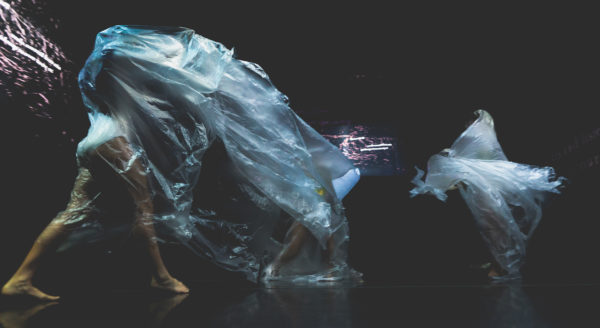
Following the performance [of extreme lyric i], artistic director Hope Mohr, writer and co-author of extreme lyric i, Maxe Crandall, and poet Dora Malech came together for a conversation on stage: “Space as Form: Sappho Now.” It is a pleasure to offer excerpts of this conversation via this space, through which we might continue nurturing our collective and collaborative Lyric I.
Tara McArthur, Karla Quintero, Suzette Sagisi, Jane Selna in extreme lyric i (2018). Photo Credit: HMD by Robbie Sweeny, video design by Ian Winters.
Diana Magaloni and Michael Govan, eds. Los Angeles: Los Angeles County Museum Press, 2016, 163-175. “Classicism and Revolution,” 170 (Both also published in Spanish.) EnglishSpanish
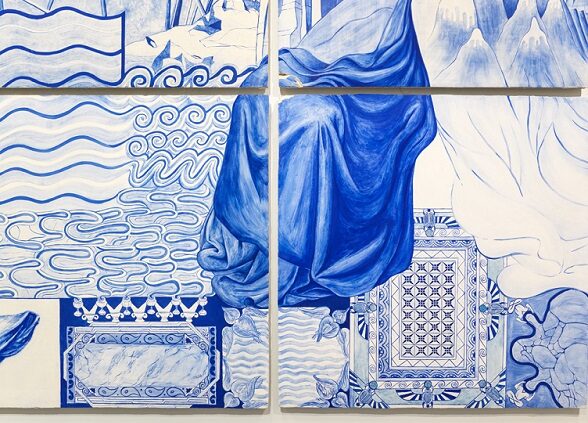
Aslı Çavuşoğlu: The Place of Stone, The New Museum of Contemporary Art, New York, September 18, 2018 – January 13, 2019.
ABSTRACT: “Devoted to the shifting valences of the color blue, Çavuşoğlu’s fresco maps transnational connections, situates ancient forms in contemporary discourse, and mines histories of pigments and materials to build up The Place of Stone from multiple loci."
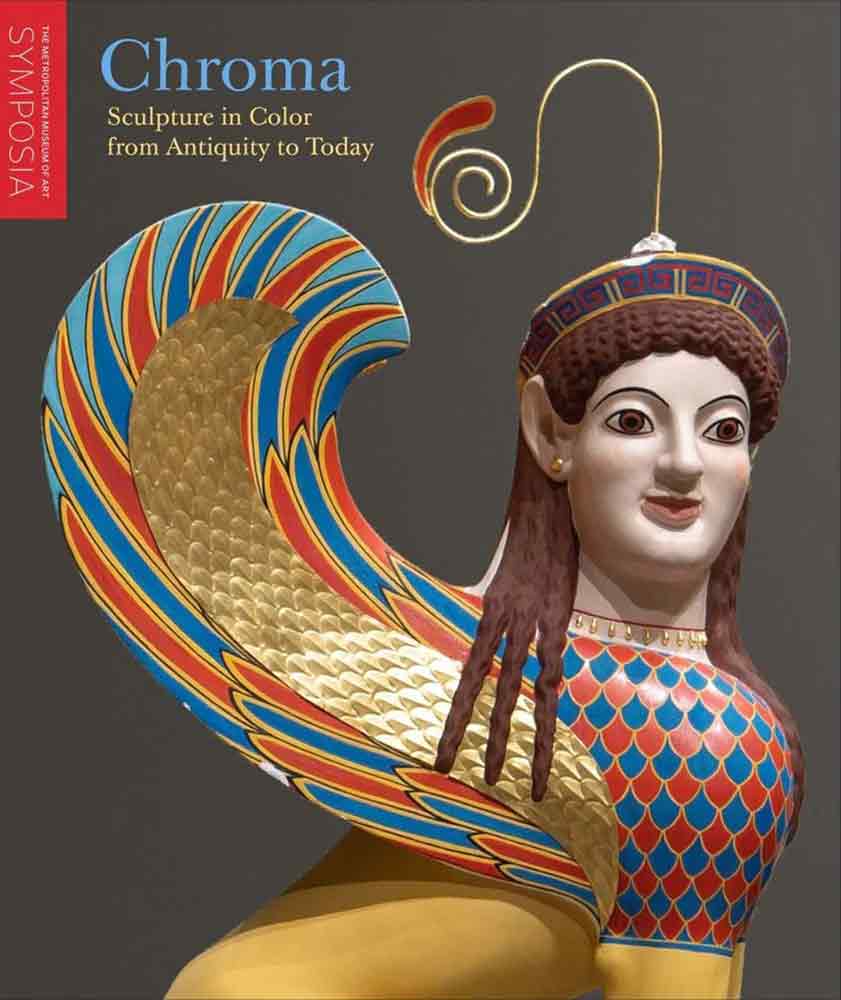
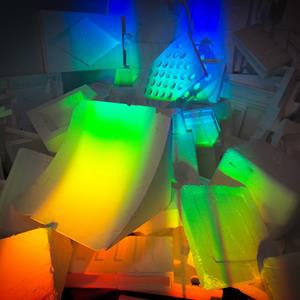
ABSTRACT: “Starting from the 2016 iteration of the Gods in Color exhibition at the Legion of Honor, this essay analyzes different approaches to the reconstruction of color on ancient Greek and Roman statues, from paint on copies or coloring in drawings to light projection, and the wider cultural implications of color’s loss in the receptions and perceptions of classical antiquity.”
ABSTRACT: In an archaeological excavation, dump layers can yield incredible, museum-worthy treasures, but removed from their intended context, these objects often resist interpretation. Finding meaning in trash, however, is not only the purview of archaeologists. Friday night I took a dark road at the southeastern edge of the city that leads toward the Recology Facility to see artists-in-residence Jeremiah Barber, Alison Pebworth, and Robb Godshaw at Recology.