-
World Art, Volume 16, Issue 2 (2026) “Tracing the Tigris”Artiplaces: Ecological and Ontological Entanglements of Ancient Artworks, edited by Benjamin Alberti and Christopher Watts.
ABSTRACT: Mosaic floors from the House of Cilicia at Seleucia Pieria, a port near Antioch-on-the-Orontes, depict topographical personifications of the territory of Cilicia framed by those of the rivers Tigris and Pyramus, among other personifications that are now damaged. Fitted together from colorful cut stones, these figural assemblages draw together place-based materials and the personhood of topographical elements. Drawing on legacy data from mosaics excavated in the 1930s and dispersed to institutions across North America, this essay argues that the afterlives of these mosaics remap the environments that they personify in modernity and, thus, craft hyperreal networks of relation to enact forms of distributed personhood. -
Johns Hopkins University - The Sheridan Libraries (28 January 2026) Preserving Antioch’s mosaic heritage through data, metadata, and geospatial visualizationSheridan Libraries’ digital scholarship expertise is helping the Antioch Recovery Project advance the digital reunification of dispersed mosaics
-
Routledge, 2025, 201-228 Stager "Antiochene Echoes" (2021)Gonzalez, Ortiz, and Stager, “Research-driven Pedagogy and Public Facing Outcomes: the Antioch Recovery Project” (2025)
Projects
The Antioch Recovery Project
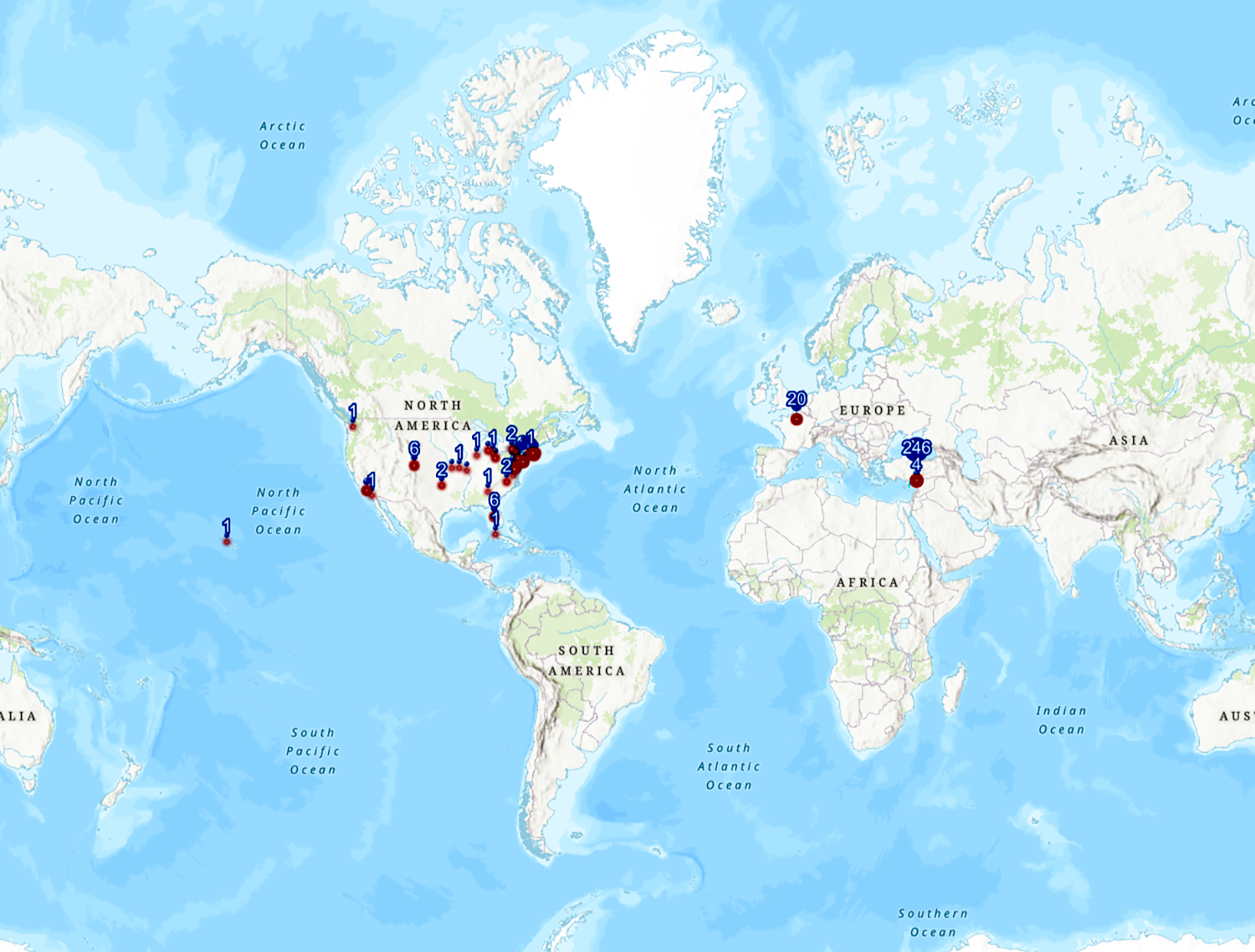
The Antioch Recovery Project (ARP) is a research lab dedicated to the study of mosaics from the city of Antioch-on-the-Orontes that uses digital tools to map and reunite virutally the atomised corpus of mosaic fragments from the site.The Antioch Recovery Project (ARP) is a research lab and connected course dedicated to the study of mosaics from the city of Antioch-on-the-Orontes. ARP uses digital tools to map and reunite virutally the atomised corpus of mosaic fragments from the site and to share these with the public and the global community of Antioch researchers. Excavated by an international team under Franco-American direction from 1932 to the onset of World War II on September 1, 1939, these fragments of mosaic have since been distributed to institutions across the globe, from Havana to Honolulu. ARP focuses on three temporal moments in the history of these objects: their ancient production and use (2nd-6th centuries CE), their modern excavation (1932-1939), and their contemporary museum afterlives.
Map of known fragments of Antioch mosaics (updated and revised 2025)
February 2020, Baltimore Museum of Art (Phase I)
Press and Related Essays
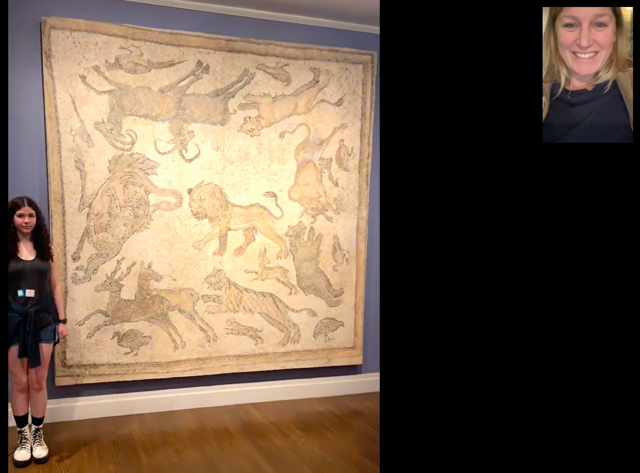
Facetime with research assistant Clementine Easa-Murphy in Honolulu (2023)
_JHU Fall 2023.jpeg)
Students from Johns Hopkins walking across a mosaic from Antioch at Dumbarton Oaks (2023).